
Key Takeaways
- Verify the agent type in any automatic fire extinguisher system before approval; wet chemical, dry chemical, and clean agent units are built for different fire class hazards and can’t be treated as interchangeable.
- Check the listing details line by line so the automatic fire extinguisher system, nozzles, parts, tags, and protected appliances all match the submitted design and the actual cooking risk.
- Confirm the detection method and discharge temperature early—fusible links, thermal bulb temp points, and tubing releases decide whether the suppression system trips soon enough to control grease fire spread.
- Review nozzle layout and cylinder capacity as one package; an automatic fire extinguisher system can be listed on paper yet still miss hood, duct, or appliance coverage if the agent quantity and discharge pattern don’t fit the hazard.
- Require manual backup hardware on the plan set, including pull stations, shutoff tie-ins, alarm contacts, and mount locations, because approval gets harder when field crews have to guess.
- Pin down recharge, inspection, maintenance, and expiration details before purchase so the automatic fire extinguisher system stays serviceable after discharge instead of creating delays, tag issues, or replacement costs.
One spec mistake in a kitchen suppression package can stall a buildout, fail an inspection, or leave a live cooking line exposed. That’s why an automatic fire extinguisher system can’t be approved off a cut sheet and a quick price check. For restaurant operators, kitchen facility managers, and project teams, the honest answer is simple: the details that look minor on paper are usually the ones that decide whether the system fits the hazard, the hood, and the code path tied to the job.
In practice, buyers need clean confirmation on agent type, fire class, listing, detection temp, nozzle layout, cylinder capacity, and manual backup integration — not vague product language, not mismatched tags, not field assumptions. A wet chemical setup that’s right for one appliance line may be wrong for another, and a listed part isn’t enough if the hood, duct, appliance, and discharge arrangement don’t match the protected hazard. Fast approvals happen when the submittal is tight, the hardware is traceable, and every installed part says the same thing. Miss one of those checks, and the problem usually shows up late — during commissioning, inspection, or worse, after ignition.
Automatic fire extinguisher system agent type and fire class match for commercial cooking hazards
Agent mismatch is one of the fastest ways to fail review.
- Verify the hazard first. A cooking line with fryers, griddles, and open-flame equipment needs an automatic fire extinguisher system built for grease-laden fire conditions, not a generic portable extinguisher method.
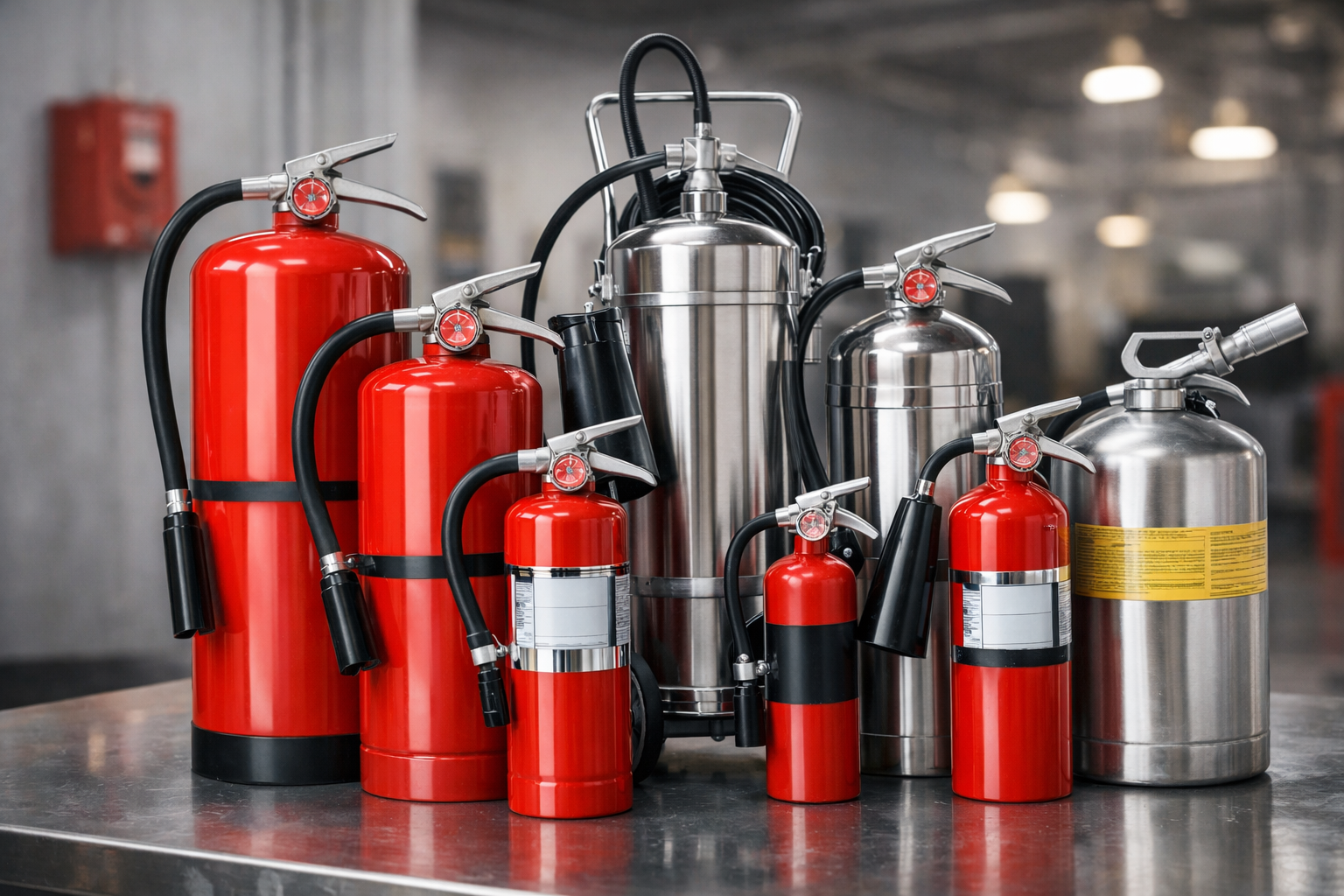
- Match agent to fuel. Wet chemical is the usual fit for commercial cooking because it cools hot oils and helps stop reflash. Dry chemical may suit some enclosed mechanical spaces, while clean agent is often written for sensitive electronics—not grease plumes under a hood.
- Check the listed fire class. Submittals should spell out Class K coverage for cooking media, plus any Class B exposure tied to flammable liquids in connected equipment.
- Watch mixed hazards. If the kitchen package includes controls, small motors, or nearby energized parts, the spec team should ask where electrical protection starts and stops. That line matters.
- Don’t swap in ABC by habit. An automatic ABC fire extinguisher system may be listed for certain dry chemical uses, but it isn’t a stand-in for a wet chemical kitchen suppression system.
- Call out adjacent spaces. An automatic fire extinguisher for electrical room serves a different risk profile than hood and duct suppression—same building, different fire class, different agent.
- Demand plain-language submittals. Buyers should expect the automatic fire suppression extinguisher for businesses package to identify nozzle locations, listed appliance types, tags, and any automatic fire extinguisher for commercial equipment included outside the hood footprint.
Wet chemical vs clean agent vs dry chemical in an automatic fire extinguisher system
Bluntly, wet chemical is usually the right answer for cooking hazards. Clean agent systems protect electronics — enclosed spaces (useful in the right room), while dry chemical units can interrupt flame spread but leave cleanup issues and may not meet the same cooking application intent.
Class K, Class B, and mixed-hazard coverage buyers need spelled out in submittals
If the paperwork just says “kitchen fire suppression system,” it isn’t enough. The reviewer should see the exact class coverage, listed appliance match, discharge points, mount details, maintenance needs, and recharge path before approval moves ahead.
Automatic fire extinguisher system listing details, UL marks, and NFPA fit should be checked line by line
Plain truth. A buyer reviewing an automatic fire extinguisher system should read the paperwork the same way an inspector will: line by line, part by part, no guessing. In practice, seven checks matter most—and a missing tag, the wrong nozzle listing, or a bad class match can stall approval fast.
- UL listed system assembly
- Correct hazard class and agent type
- Matched nozzle part numbers
- Appliance and hood coverage details
- Duct protection notes
- Current tags and service records
- Manufacturer installation manual
What buyers should confirm on listed parts, tags, and manufacturer documentation
Start with the nameplate. The listed parts on the cylinder, detection method, tubing, nozzles, and mount hardware should match the manufacturer sheet exactly—not close, exact. The manual should show the approved use, recharge steps, maintenance intervals, and any expiration limits for cartridges, thermal elements, or disposable parts.
For smaller enclosed hazards, an automatic ABC fire extinguisher system may be listed for a narrow set of uses, while an automatic fire suppression extinguisher for businesses still needs records that prove the installed parts and tags are current.
Why hood, duct, appliance, and nozzle approvals must match the protected hazard
Here’s what most people miss: approval follows the hazard, not the sales label. A wet-chemical hood setup used over fryers isn’t approved just because the cylinder is listed; the hood plenum, duct run, appliance line, nozzle caps, and flow points all have to match the tested layout.
And that’s where most mistakes happen.
An automatic fire extinguisher for electrical room should be checked against the actual electrical risk, and an automatic fire extinguisher for commercial equipment should match the exact equipment enclosure called out in the documentation.
Automatic fire extinguisher system detection method, discharge temperature, and nozzle layout decide whether it will act in time
Nearly 3 out of 4 failed kitchen suppression reviews trace back to detection or coverage errors, not the agent cylinder itself. That catches buyers off guard, yet it matches what inspectors keep finding: an automatic fire extinguisher system is only as fast as its release method, heat response point, and nozzle pattern.
- Detection method
- Discharge temperature
- Nozzle layout
- Appliance edge coverage
- Duct entry protection
- Grease path overlap
- Reset and maintenance access
Fusible links, thermal bulb temp, tubing, and other automatic release methods
Bluntly, release delay kills performance.
Fusible links and thermal bulb temp ratings have to match the hood’s real heat profile—not the label on the menu line—while tubing-based detection has to stay clear of impact, grease buildup, and service damage.
For mixed-hazard areas, an automatic ABC fire extinguisher system may cover small Class A, Class B, and some electrical fire exposures, but cooking lines still need a listed suppression setup matched to the appliance type. A buyer looking at an automatic fire extinguisher for electrical room should verify heat sensing, discharge residue, and shutdown interface before approval.
In practice, automatic fire suppression extinguisher for businesses gets specified too loosely; buyers should ask for listed temperatures, release parts, tags, and maintenance intervals in writing.
Nozzle placement, appliance geometry, and grease path coverage inside the hood and duct
Nozzle count alone means nothing. An automatic fire extinguisher system has to hit fryers, charbroilers, plenum space, and duct openings with the right angle and throw—especially where grease rolls, pools, and flashes.
It’s not the only factor, but it’s close.
Even a well-sized automatic fire extinguisher for commercial equipment can miss hazard points if nozzle caps are left on, mount heights drift, or appliance swaps change geometry. That’s why buyers should review the protected area drawing, appliance layout, and service record before sign-off.
Automatic fire extinguisher system cylinder size, agent quantity, and manual backup hardware affect approval and field use
A plan review stalled after a kitchen build team approved a pre-piped setup with the wrong cylinder size. The hood line looked fine on paper, — the agent quantity didn’t match the appliance load, and the manual pull station was placed behind a prep counter. That kind of miss slows approval and creates field rework.
For an automatic fire extinguisher system, buyers should verify seven specs before signoff:
- Cylinder size
- Agent quantity
- Nozzle and discharge layout
- Manual pull station hardware
- Gas or power shutoff tie-ins
- Alarm contacts and monitoring points
- Mount location and access clearance
In practice, a listed automatic fire extinguisher for commercial equipment still has to match the hazard, the class of fuel, and the protected volume. A small cylinder on a larger line set won’t pass inspection. And a multi-purpose approach that works in one room may fail in another.
An automatic ABC fire extinguisher system may suit enclosed mixed-hazard spaces, while an automatic fire extinguisher for electrical room needs clean planning around residue, shutdown sequence, and mount access (service techs will check that fast).
Remote pull stations, gas shutoff tie-ins, alarm contacts, and mount locations that belong on the plan set
Plan sets should show pull station height, travel path, fuel shutoff method, alarm interface, and parts listed for the final type used.
The difference shows up fast.
Recharge, inspection, maintenance, and expiration details buyers should pin down before purchase
The honest answer is simple: pin down recharge lead time, inspection tags, service intervals, and replacement parts before release. An automatic fire suppression extinguisher for businesses isn’t just a fire device—it’s a maintenance item with expiration, discharge, and reset costs attached.
Automatic fire extinguisher system approval decisions should come down to seven specs buyers can verify fast
What are buyers really checking before they approve an automatic fire extinguisher system? The honest answer is: seven specs, checked in plain language, before the submittal moves forward.
The seven specs to request before sign-off: agent type, fire class, listing, detection temp, nozzle layout, cylinder capacity, and manual backup integration
For kitchen lines, enclosed hazards, and small equipment spaces, spec review should stay tight — and documented. A mismatch here can affect fire coverage, service intervals, and the way portable extinguishers fit into the emergency method already in place.
- Agent type: confirm wet chemical, clean agent, dry chemical, or another type is right for the hazard.
- Fire class: match the unit to Class K, electrical, or multi-purpose risks; an automatic ABC fire extinguisher system isn’t right for every cooking application.
- Listing: ask for UL listed data and installation instructions.
- Detection temp: verify thermal bulb or link temperature fits the ambient conditions.
- Nozzle layout: check hood, plenum, duct, or enclosed equipment coverage — no guessing.
- Cylinder capacity: make sure the charge matches the protected volume and discharge time.
- Manual backup integration: confirm pull station tie-in and how the suppression system works with shutdowns.
An automatic fire extinguisher for electrical room duty calls for a different agent than fryer or range protection. The same goes for an automatic fire suppression extinguisher for businesses protecting mixed hazards, or an automatic fire extinguisher for commercial equipment inside compact machine housings.
Frequently Asked Questions
How does an automatic fire extinguisher work?
An automatic fire extinguisher system detects heat or flame and releases its agent without anyone pulling a pin or aiming a nozzle. In kitchens, that usually means fusible links, heat-sensitive tubing, or a thermal trigger that opens the system and sends wet chemical or another listed agent onto the hazard area. The point is speed. Fires grow fast, and automatic discharge can stop a small fire before staff can even grab portable extinguishers.
How much does an FM-200 system cost?
It varies a lot by room size, hazard, cylinder count, controls, detection, and reset work after discharge. For a small protected space, costs can start in the low thousands, while larger clean-agent system installs can run far higher once design, alarms, shutdowns, and commissioning are included. For cooking equipment, buyers shouldn’t assume FM-200 is the right type; kitchen hazards usually call for systems listed for that use, not a clean-agent setup borrowed from another application.
Can vinegar put out fire?
No. Vinegar is not a fire suppression agent and should not be treated like one. On a grease fire, using kitchen myths instead of the right automatic fire extinguisher system or a Class K extinguisher wastes seconds that matter.
What size fire extinguisher for CMV?
For a commercial motor vehicle, size depends on the vehicle type and the rule set that applies to that operation. A common baseline is a listed extinguisher with at least a 5-B:C rating, but some fleets carry larger units or add an automatic fire extinguisher system in engine compartments for added protection. The honest answer is simple: check the vehicle rule, the cargo risk, and the insurer requirement before picking a mount or bracket.
What’s the difference between an automatic fire extinguisher and a full suppression system?
An automatic extinguisher is usually a self-contained unit that discharges at one point or into one enclosure. A full fire suppression system has detection, piping or tubing, discharge nozzles, manual pull options, shutdown interlocks, and listed parts designed to work together. For fryers, ranges, and hood ducts, that difference matters a lot.
Where is an automatic fire extinguisher system usually used?
Common locations include commercial kitchens, vehicle engine bays, marine spaces, electrical cabinets, small enclosures, and equipment compartments. Each hazard needs the right class and agent. A kitchen grease fire doesn’t call for the same method used in a boat engine room or a clean electrical enclosure.
Let that sink in for a moment.
Does an automatic fire extinguisher system replace portable extinguishers?
No—and that’s a mistake people keep making. Automatic suppression handles the first attack, but codes and good practice still call for portable extinguishers nearby, with the right class markings, visible tags, and staff who know the PASS acronym: pull, aim, squeeze, sweep.
How often does an automatic fire extinguisher system need maintenance?
It needs scheduled inspection — service based on the listed system instructions, the agent type, and the rule set in force for that equipment. In practice, kitchen systems often need semiannual inspection, while cylinders, nozzles, tubing, caps, and manual pull stations should be checked for damage, obstruction, tampering, and expired service intervals. Skip maintenance and the system might fail when heat hits.
Can an automatic fire extinguisher system be recharged after discharge?
Usually yes, but it isn’t just a quick refill. After discharge, the system may need new agent, replacement cartridges, fresh fusible links, cleaned nozzles, new seals, updated tags, and a full functional check before it’s put back in service. If parts are damaged or obsolete, replacement can make more sense than recharge.
What’s the best type for a kitchen: ABC, clean agent, or Class K?
For commercial cooking with grease-producing equipment, Class K protection is the right direction, paired with a listed automatic fire extinguisher system built for hood and duct hazards. ABC extinguishers are still often used in the building for ordinary combustibles, but they aren’t the main answer for hot cooking oils. Wrong agent, wrong result.
Approval shouldn’t rest on a product sheet that looks complete at a glance. Buyers need to see the hard match between agent type and the cooking hazard, the exact listing details for each protected area, and the release method that will trip fast enough to matter once heat builds inside the hood or duct. Miss any one of those, and the submittal can look acceptable on paper while leaving gaps in the field.
That’s why a serious review of an automatic fire extinguisher system has to go past model numbers. The nozzle layout has to fit the appliance line it’s meant to protect. Cylinder capacity has to support the hazard, not just the budget.
If any item is vague, send it back for correction before purchase approval.
For more great reading, visit our site and explore related topics.