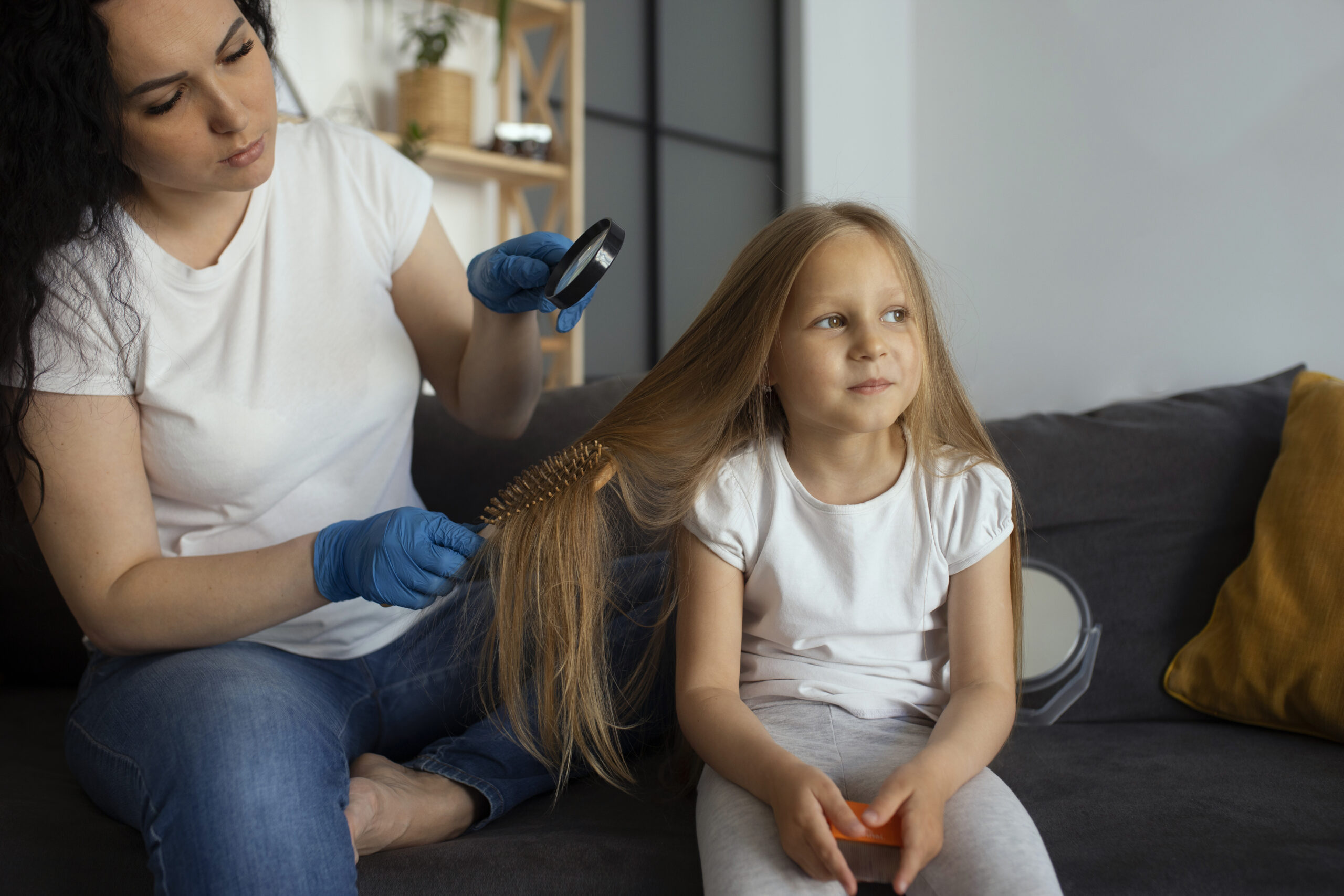

You know the feeling. You’re brushing your child’s hair before school, maybe rushing a bit because you’re already running ten minutes late. Then you see it. Something is moving near the scalp. You freeze. Your stomach drops into your shoes.
In that split second, you aren’t thinking about biology or entomology. You’re thinking about the phone call you have to make to the school. You’re thinking about the judging looks from other moms at pickup. You’re thinking about the mountain of laundry waiting for you at home. But while we adults worry about the logistics and the social embarrassment, we often forget who is actually bearing the brunt of this experience: the kid in the chair.
For a child, a lice diagnosis often feels like a character judgment. In the brutal social hierarchy of elementary and middle school, being known as the “kid with bugs” can be a devastating blow to self-esteem. It marks them as “unclean” or “different,” leading to isolation that can last long after the last nit has been combed out.
This psychological weight is exactly why many modern parents are done with the weeks-long battles of home remedies. They are realizing that the faster the problem is solved—perhaps by visiting a professional lice clinic for a one-and-done treatment—the less time their child has to sit in the uncomfortable spotlight.
We need to have an honest conversation about the hidden emotional costs of this common childhood rite of passage, and how we can protect our children’s mental health while we treat their scalps.
The Dirty Kid Myth That Won’t Die
Let’s clear the air on the biggest lie in the book: lice do not like dirty hair. Biologically, they actually prefer clean hair. It’s easier for them to glue their eggs (nits) to a hair shaft that isn’t slick with grease or product. But try explaining that to a fourth grader.
Despite the science, the cultural association between lice and filth is deeply entrenched. When a child gets lice, they feel gross. They worry that their friends will think they don’t shower or that their house is dirty. This is particularly damaging for sensitive children who are already conscious of their image.
This internal shame leads to withdrawal. You might notice your child stops raising their hand in class, avoids sitting near friends at lunch, or refuses to participate in sports. They are terrified of being discovered, and they shrink into themselves to avoid judgment.
The Scarlet Letter of the School Nurse
In many schools, the protocol for a suspected case of lice is swift and public. The teacher gets a call, points to the student, and sends them to the nurse’s office, and the student doesn’t come back.
While the policy is intended to stop the spread, the social optics are brutal. The student’s empty desk becomes a beacon of speculation. By the time recess rolls around, the rumor mill is churning. “Did you hear why Sarah left? She has bugs.”
When that child returns to school the next day (or days later, if the home treatment fails), they are walking back into a room where everyone knows their secret. This can lead to kids physically recoiling, refusing to share space, or being left out of sleepovers because other parents are afraid of the risk. It’s isolating, and for a kid just trying to fit in, it’s a nightmare.
When Parental Panic Makes It Worse
Here is the hard truth: children are emotional sponges and absorb our energy. When a parent discovers lice and immediately goes into hazmat mode—stripping beds in a panic, crying, scrubbing the floor with bleach, or expressing disgust—the child watches this and thinks, I caused this disaster.
If you act like your house is a toxic waste zone, your child feels like they are the hazardous material. We often vent our frustrations with phrases like, “I am so embarrassed,” or “I can’t believe we have to deal with this filth again.” We are just venting about the situation, but to a child’s ears, it sounds like rejection. It reinforces the idea that their body is the source of the family’s misery.
The Trauma of the Treatment
The psychological toll is compounded when the infestation drags on, and unfortunately, it often does. If a family relies on over-the-counter shampoos (which have a massive failure rate these days due to super lice resistance), the ordeal can last for weeks. Imagine the daily life of that child:
- Every night involves painful combing and smelling like chemicals.
- Every morning involves a stressful head check before school.
- For weeks, they are told not to hug their friends or lean back on the couch.
This state of chronic vigilance creates anxiety. The child can’t relax. They become hyper-aware of every itch. Even after the lice are gone, many children experience phantom itching and anxiety about re-infestation. They start obsessing over their personal space because they are terrified of going through it again.
Flipping the Script: Empathy Over Extermination
So, how do we fix this? How do we treat the bugs without crushing the spirit?
First, change the narrative. Sit your child down and explain it scientifically, but keep it simple. “Lice are just like mosquitoes. They are annoying bugs that want a snack. They don’t care if you are clean or dirty; they just like people. It’s like catching a cold—it happens to everyone, and we will fix it.” By comparing it to a cold or a mosquito bite, you remove the morality from the equation. It becomes a medical nuisance, not a hygiene failure.
Second, choose speed. The best way to kill the stigma is to kill the timeline. If you can solve the problem in a single afternoon, it doesn’t become part of your child’s identity. It’s just a weird Tuesday. This is why professional treatment is often a better choice for the child’s mental health. It turns a weeks-long battle into a one-hour appointment. The child walks out lice-free, meaning they can go back to school the next day with confidence, knowing they aren’t carrying anything back into the classroom.
Finally, be their advocate. If your child is being excluded, step in. Speak to the teacher—not just about the lice policy, but about the social climate. Ask them to keep an eye out for exclusion during group activities. And if the school sends out a notification letter to other parents, ensure your child’s name is kept strictly confidential.
We cannot control the fact that parasites exist. They have been annoying humans for thousands of years. But we can control how we react to them. A louse is a tiny, fragile insect. It shouldn’t have the power to make a child feel small. By reacting calmly and fixing the problem quickly, we ensure the only things our kids lose are the bugs.